
From Novice to Ocean Master: The Complete Guide to IYT Certifications


At Sailing Munich, we do not just teach you how to pull ropes. We train you to command vessels with competence and safety. Whether you are looking to charter a sailboat for a family holiday in Croatia or aiming to cross the Atlantic, understanding the certification path is the first step.
We operate under the International Yacht Training (IYT) system. It is the most internationally accepted standard, recognized by 25 governments worldwide and major charter companies.
Here is the breakdown of the certifications we offer, their requirements, and exactly what they allow you to do.
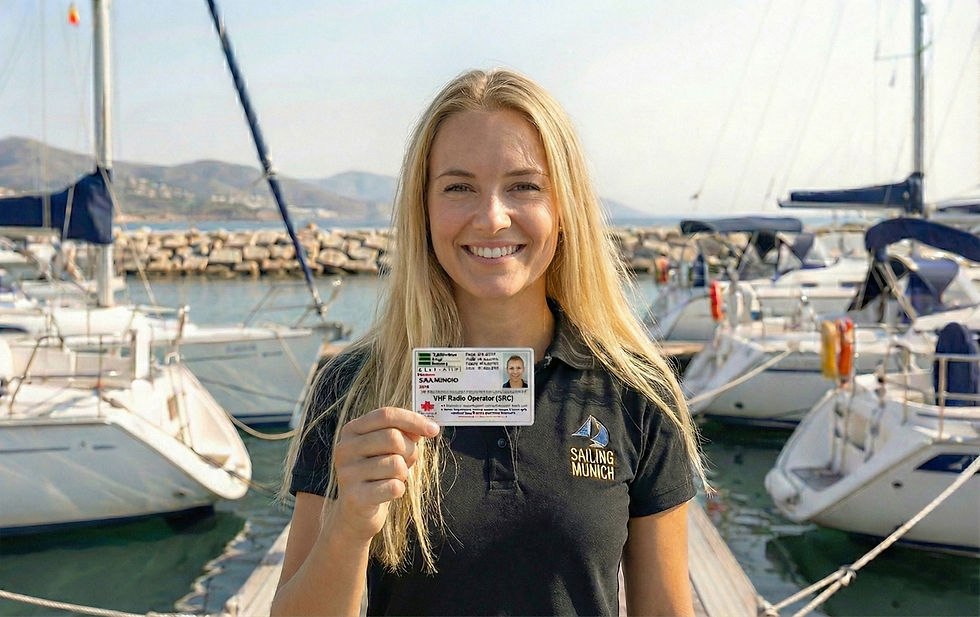
1. The Foundation: VHF Marine Communication Master (SRC)
Status: Mandatory for all Skipper certifications.
Before you can command a boat, you must know how to communicate. This is not just a formality, it is a critical safety requirement. Many countries, including Croatia, will not rent you a boat without a VHF license on board.
What you learn: Distress procedures (Mayday, Pan Pan), GMDSS (Global Maritime Distress and Safety System), and digital selective calling.
Prerequisites: None.
Where we teach it: Munich (Lake Starnberg) or Croatia.
2. International Crew (Competent Crew)
Status: Entry Level.
This course is for complete beginners or those who have sailed as passengers but want to become active, useful team members. You will not be the captain yet, but you will be the captain's right hand.
Scope: You learn to handle lines, fenders, steer the boat, keep a lookout, and understand sailing terminology.
Prerequisites: None.
Limitations: You are qualified to crew on a vessel up to 24 meters.
3. International Bareboat Skipper
Status: The "Charter License".
This is our most popular course for recreational sailors. It gives you the legal authority to rent (charter) a boat on your own.
Scope: Command of a vessel up to 24 meters (78 ft).
Limitations:
Daylight hours only (fair weather).
Up to 20 miles from a safe haven.
Prerequisites:
VHF / SRC Certificate.
Minimum 200 nautical miles logged.
10 days at sea (with minimum 5 days as active crew).
Where: Practical exam takes place in Croatia.
4. Yachtmaster Coastal
Status: Advanced Recreational / Entry Professional.
This is a significant step up. It bridges the gap between a holiday sailor and a serious mariner. It proves you can handle higher pressure and more complex navigation.
Scope: Command of a vessel up to 24 meters.
Limitations:
Day and Night operation.
Up to 60 miles from a safe haven.
Prerequisites:
VHF / SRC Certificate.
800 nautical miles logged.
25 days at sea (2 days as skipper).
12 hours on watch at night.
5. Yachtmaster Offshore
Status: The Gold Standard.
This is the certification that distinguishes a true captain. It is highly respected globally and requires demonstrating the ability to handle a yacht in challenging conditions.
Scope: Command of a vessel up to 24 meters (recreational or commercial).
Limitations:
Day and Night operation.
Up to 150 miles from a safe haven.
Prerequisites:
VHF / SRC Certificate.
3,000 nautical miles logged.
50 days at sea (30 hours on watch at night).
Current First Aid certificate.
6. Yachtmaster Ocean
Status: The Pinnacle.
This is for those who dream of crossing oceans. It moves beyond terrestrial navigation (GPS and landmarks) to celestial navigation.
Scope: Command of a vessel up to 24 meters anywhere in the world.
Limitations: Unlimited. No distance restrictions.
Prerequisites:
Hold a Yachtmaster Offshore certificate.
Evidence of a qualifying passage (minimum 600 nautical miles offshore, continuously).
Complete a celestial navigation exam (Sun and Stars).
Ready to start your journey?
Whether you need the VHF basics or are chasing the Yachtmaster horizon, we build your path at Sailing Munich.
Fair winds,
Leo Cunha


Comments